An independent field guide to physical media

Physical
media is
alive.

Vinyl, reel-to-reel tape, the ordinary Compact Cassette, CDs and MiniDisc are five very different ways to keep music. Explore how they were made, how they sound, what plays them, and where each one fits in a connected world.

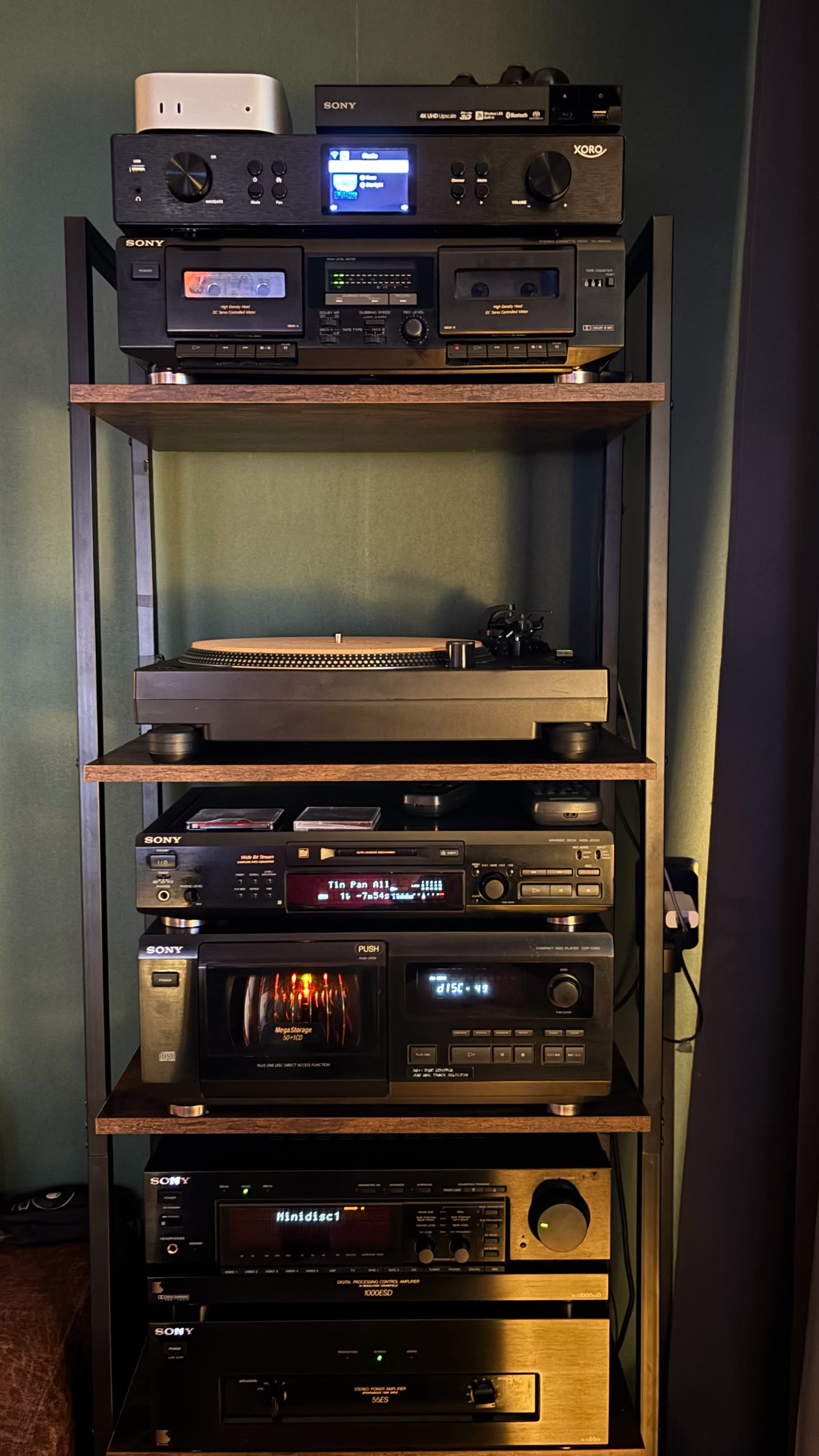
A home listening system with a turntable, CD changer and MiniDisc deck
A shelf full of ways to listen

What makes a medium physical?

Physical media stores music on an object that can remain in your collection. An LP stores sound in grooves. Open-reel tape and a Compact Cassette store it magnetically. A CD carries optical digital data, while MiniDisc uses a small magneto-optical disc inside a cartridge.

The formats differ in sound, capacity, cost, portability, recording options and the players they need. A format is more than the object itself. It also includes the machines, habits, shops, artwork and memories that grew around it.

Physical does not automatically mean better sound. The mastering, condition and playback equipment matter as much as the format. Physical media offers something different: a copy you can keep, lend, display and play without an active music catalogue.
5formats explored
1935Magnetophon shown
1992MiniDisc arrives

Meet the formats.

Start with four familiar formats, then meet open-reel tape in a feature of its own below.

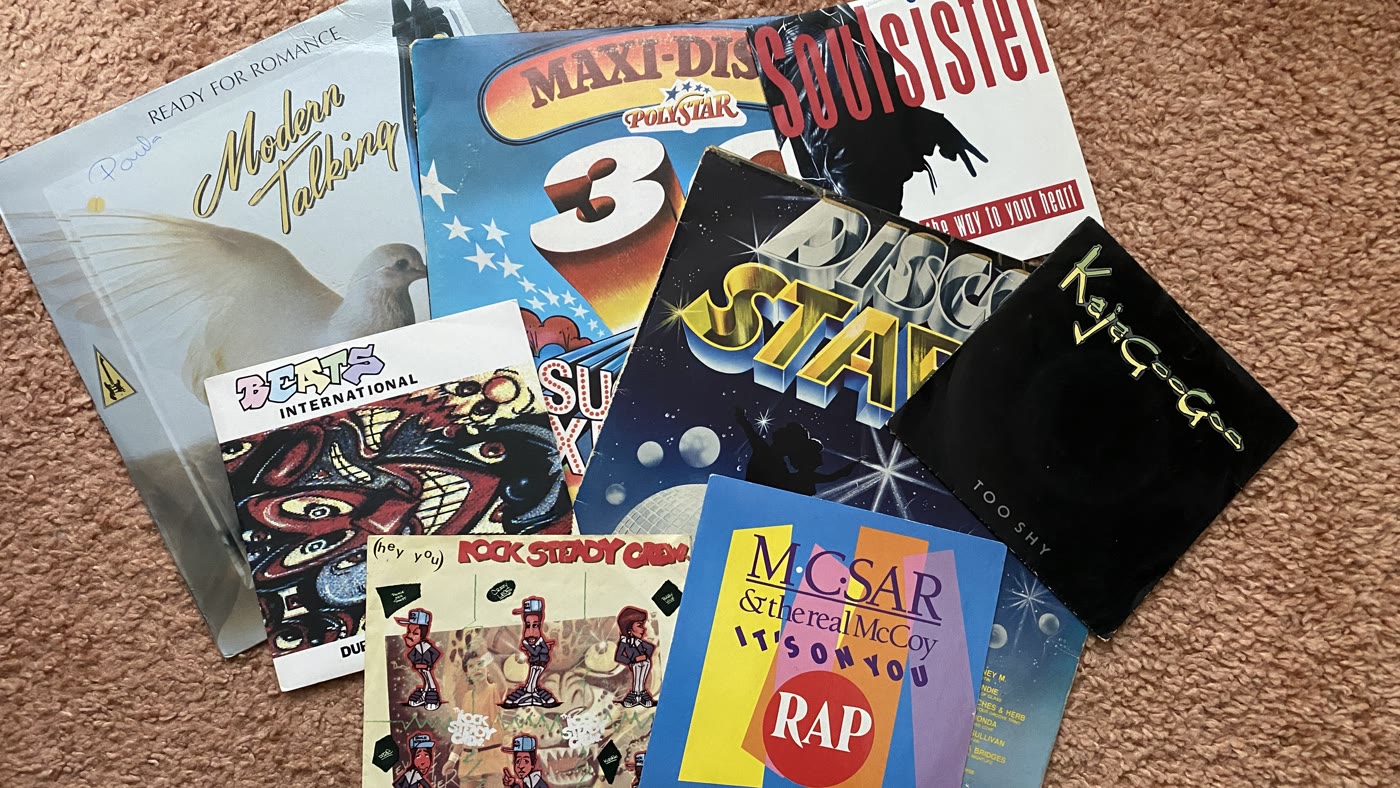
A collection of twelve-inch record sleeves and album artworkAnalogue / Groove
Album artwork is part of the listening experience.
01 / The album as an object1948

Vinyl

Vinyl is an analogue record format. A spiral groove carries the music as tiny physical movements, from the broad album sleeve to the last seconds of a side.

Origin
Columbia Records introduced the 12 inch microgroove LP in 1948. Peter Goldmark led the engineering team that refined the successful format.
Sound
A good pressing on a well set up turntable can sound open and detailed. Surface noise, clicks and wear are possible, and mastering strongly shapes the result. Vinyl is not automatically more accurate than digital.
Player
You need a turntable with a suitable stylus and cartridge, a phono input or separate phono preamp, then an amplifier and speakers or headphones. Most LPs play at 33⅓ rpm, many 7 inch singles at 45 rpm.
Portability
Low. Records are larger and need careful handling. Portable turntables exist, but this is a format for a shelf, a listening room and time set aside to play an album.
In a car
There is no ordinary car stereo for LPs. A custom, secured and vibration controlled turntable installation is possible, but it is bulky and impractical for everyday driving.
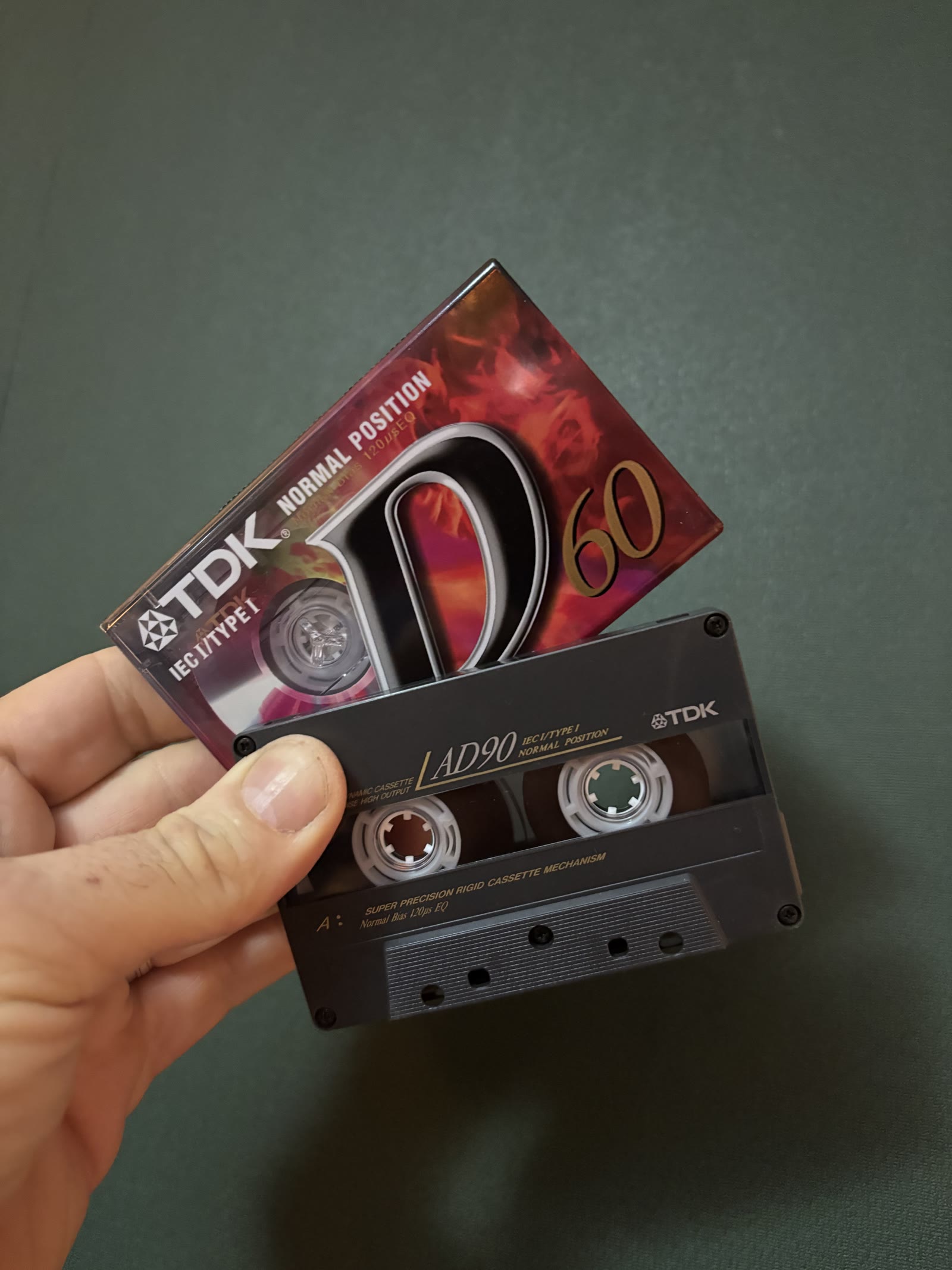
A TDK Compact Cassette held in front of its caseMagnetic tape
A standard Compact Cassette held in front of its TDK case.
02 / The portable mixtape1963

Cassette tape

The ordinary Compact Cassette puts two reels of magnetic tape inside a small plastic shell. It can hold a finished album, or become a personal recording made at home, in a studio or from the radio.

Origin
Philips designer Lou Ottens led the team that developed the Compact Cassette, introduced in Berlin in 1963. Prerecorded music followed in 1966, then a Philips car radio with cassette arrived in 1967.
Sound
Sound is analogue and varies with the tape formulation, recording level, deck alignment and condition. Type I, Type II and Type IV tapes each have different performance. Hiss and small speed changes can be audible, while matching Dolby noise reduction can lower hiss.
Player
Use a Compact Cassette player or deck. For recording, the machine needs a recording input. Clean heads and a healthy transport help keep playback clear and at the right speed. This guide means the regular cassette, not DAT or DCC.
Portability
High. The tape is light, easy to carry and recordable. A Walkman, pocket recorder or portable stereo can run on batteries, and a cassette is quick to swap or rewind.
In a car
Very practical in older cars with a cassette deck. Newer cars may need an aftermarket cassette receiver or an external player. A cassette to AUX adapter only works when the car already has a tape slot.
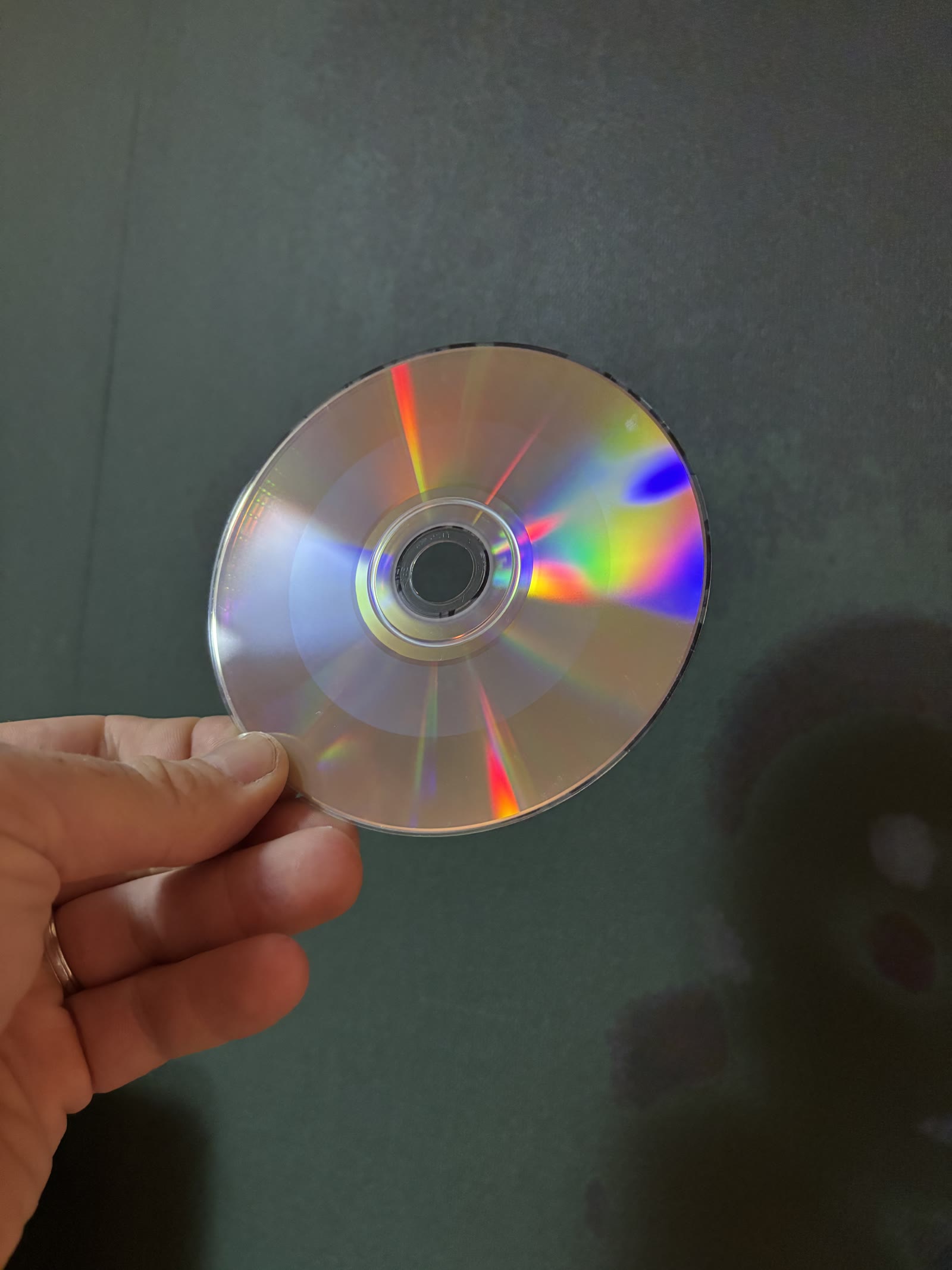
A compact disc held by its edge, catching coloured lightDigital / Optical
A CD held by its edge, catching light across the reflective surface.
03 / Digital sound, physical disc1982

Compact Disc

The Compact Disc made digital audio a familiar household format. The disc is read optically, so a laser retrieves the music without a stylus riding in a groove.

Origin
Philips and Sony engineers developed the Compact Disc together. The first commercial CD player and titles went on sale in Japan in 1982, ten years before the MiniDisc launch.
Sound
A standard audio CD stores uncompressed stereo PCM at 16 bit and 44.1 kHz. Playback is quiet and consistent when the disc reads correctly. The original design aimed for about 75 minutes, but mastering and transfer still matter more than the label on the format.
Player
Use a CD player, or a computer, DVD player or Blu ray player that supports audio CDs. Connect its analogue or digital output to headphones, an amplifier or powered speakers.
Portability
Medium to high. The disc is light and easy to pack, and portable CD players made albums mobile. A disc is less forgiving than a cassette when scratched, and a player needs power.
In a car
Common in many older car stereos, often with multi disc changers. If your car lacks a CD drive, an aftermarket head unit or external player can work. Playing a ripped file over USB is convenient, but the car is then playing a digital file, not the disc.
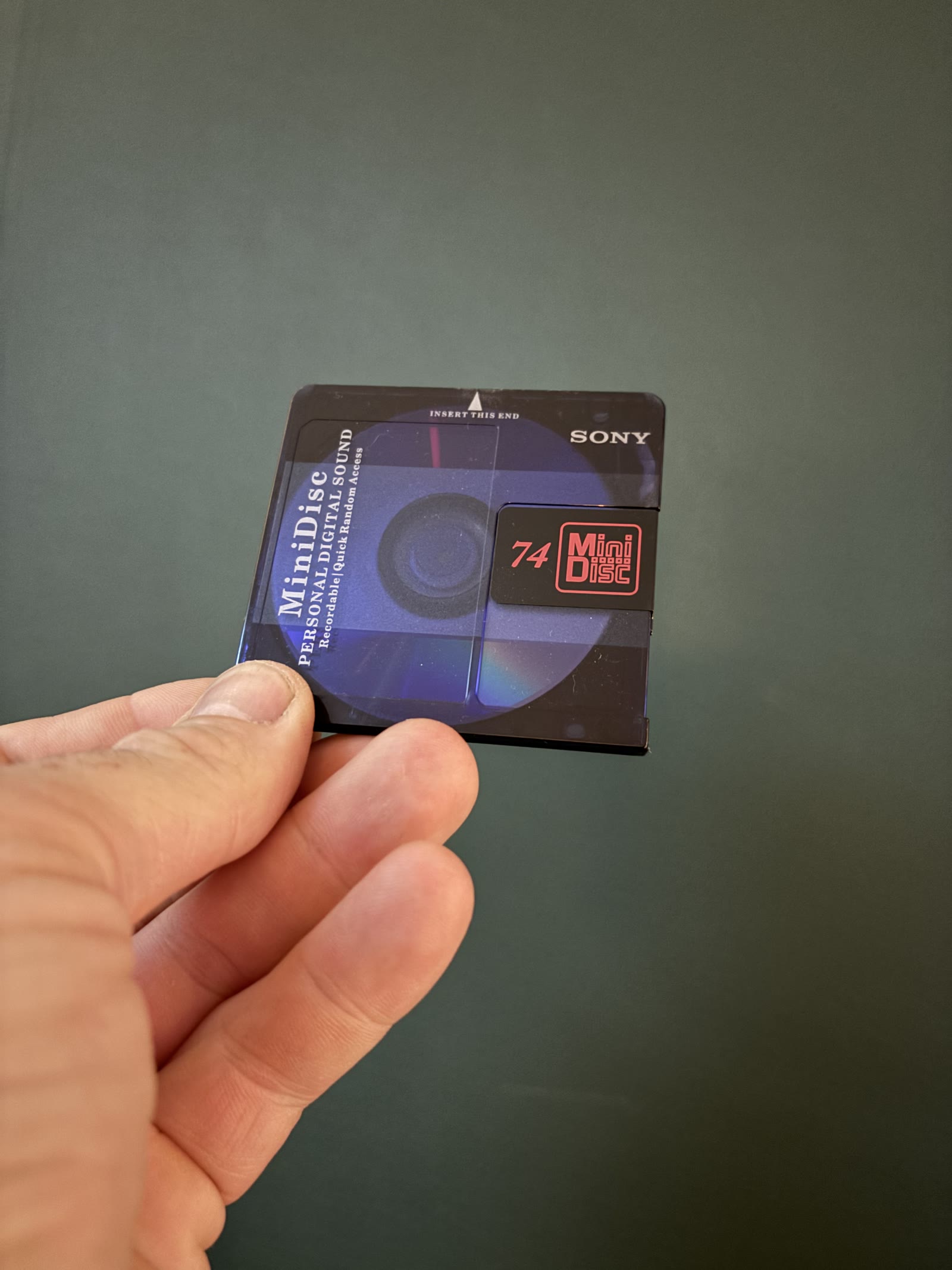
A Sony 74 minute MiniDisc held in handPersonal favourite
A MiniDisc cartridge in hand, ready to record or play.
04 / A tiny disc with big ideas1992

MiniDisc

Sony developed MiniDisc as a recordable digital alternative to cassette. The 64 millimetre disc sits inside a protective cartridge, with quick track access and a small size made for listening on the move.

Origin
Sony began the project in 1990, announced MiniDisc in 1991 and launched the first players and recorders in Japan in November 1992. Its magneto optical system combined a small disc with a recordable design.
Sound
Standard MiniDisc uses ATRAC perceptual audio compression, so it is digital but not uncompressed CD audio. It can sound excellent. Codec generation and recording mode matter, and MDLP modes trade more compression for longer play time.
Player
You need a MiniDisc player, recorder or home deck. Recording models may have microphone, line or optical inputs. Check support for MDLP, NetMD or Hi MD before buying, because not every unit handles every later variation.
Portability
Very high. The cartridge protects a pocket sized disc, and early portable models added memory to help prevent skipping when carried. A recordable disc can be edited, labelled and reused.
In a car
Dedicated in car MiniDisc players existed, but are now a specialist find. A compatible original head unit is easiest. Otherwise, look for a player with a line output and connect through the car stereo's AUX or Bluetooth input.
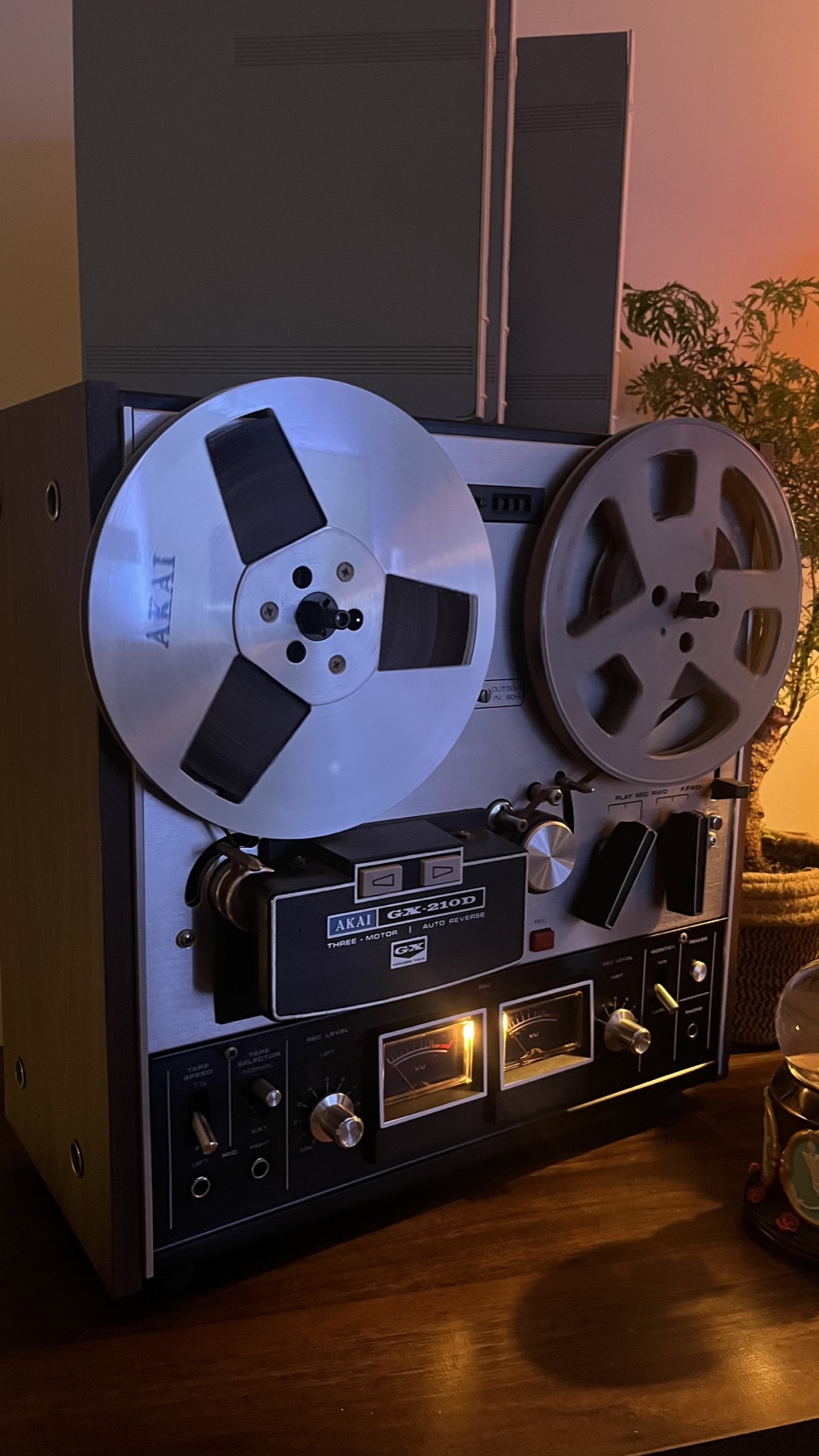
The author's Akai GX-210D open-reel tape recorder with two reels and illuminated VU metersMagnetic / Open reel
The Akai GX-210D, a three motor, auto reverse stereo deck.
Bonus format / A machine made to be seen1935

Reel-to-reel tape

Open-reel tape puts the magnetic tape out in the open. You thread it from a supply reel, across the heads and onto a take-up reel. The machine's movement becomes part of the ritual, and part of the room.

Origin
There was no single inventor. Fritz Pfleumer developed magnetic tape in the late 1920s. AEG engineer Eduard Schüller and colleagues made it practical for recording, presenting the Magnetophon in 1935. Ampex brought its Model 200 studio recorder to the United States market in 1948.
Sound
A well-kept reel on a correctly aligned deck can deliver detailed analogue sound. Faster tape and wider tracks generally improve the signal to noise ratio, but use more tape. Hiss, print-through, wear and speed variation can be audible, so it is not automatically better than vinyl or CD.
Player
You need an open-reel tape recorder, an amplifier and speakers or headphones. Home decks commonly run at 3¾ or 7½ inches per second. Match the machine to the reel size, tape width, track layout, speed and equalisation because a reel does not simply fit every machine.
Portability
Low. The reels are delicate, the recorder is large and most home decks need mains power. Compact portable recorders existed, but open-reel machines were never as easy to carry as a cassette Walkman.
In a car
Not practical for everyday driving. There are no ordinary car decks, reels need careful threading and exposed tape is vulnerable to dust and vibration. A custom installation would be a rare collector project, not a convenient way to play music.

Make a mix you can hold.

Explore ten personal Spotify playlists, each no longer than 80 minutes, and discover how a mix can live on CD, MiniDisc or cassette.

Visit the recording guide
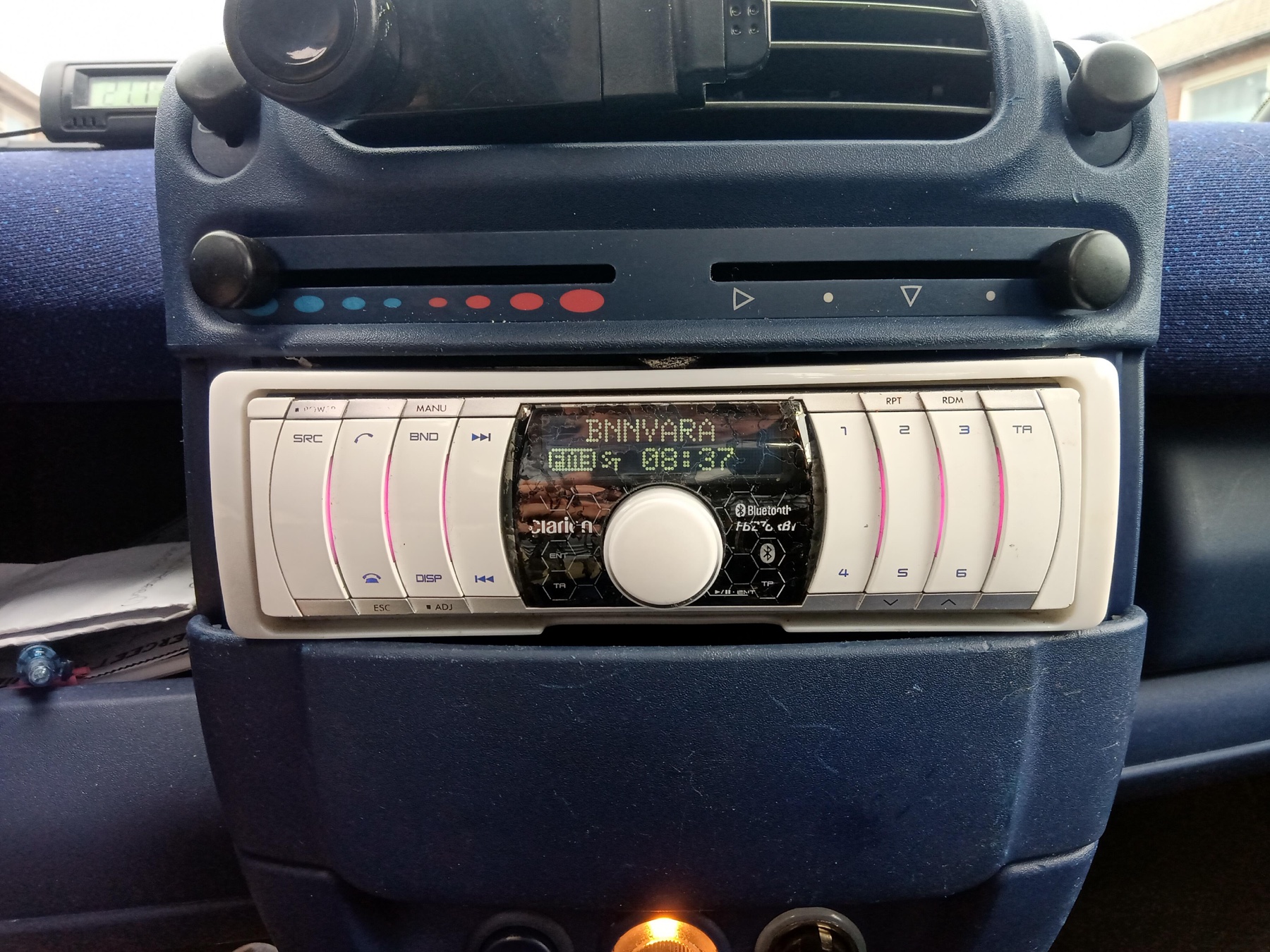
Clarion car stereo installed in a dashboard, with its display and controls clearly visible
A Clarion car stereo installed in a dashboard

Take the music with you.

A CD, cassette or MiniDisc plays straight from the car stereo. No mobile data, streaming signal or phone required, just a compatible player and the music you brought along.

Explore car audio
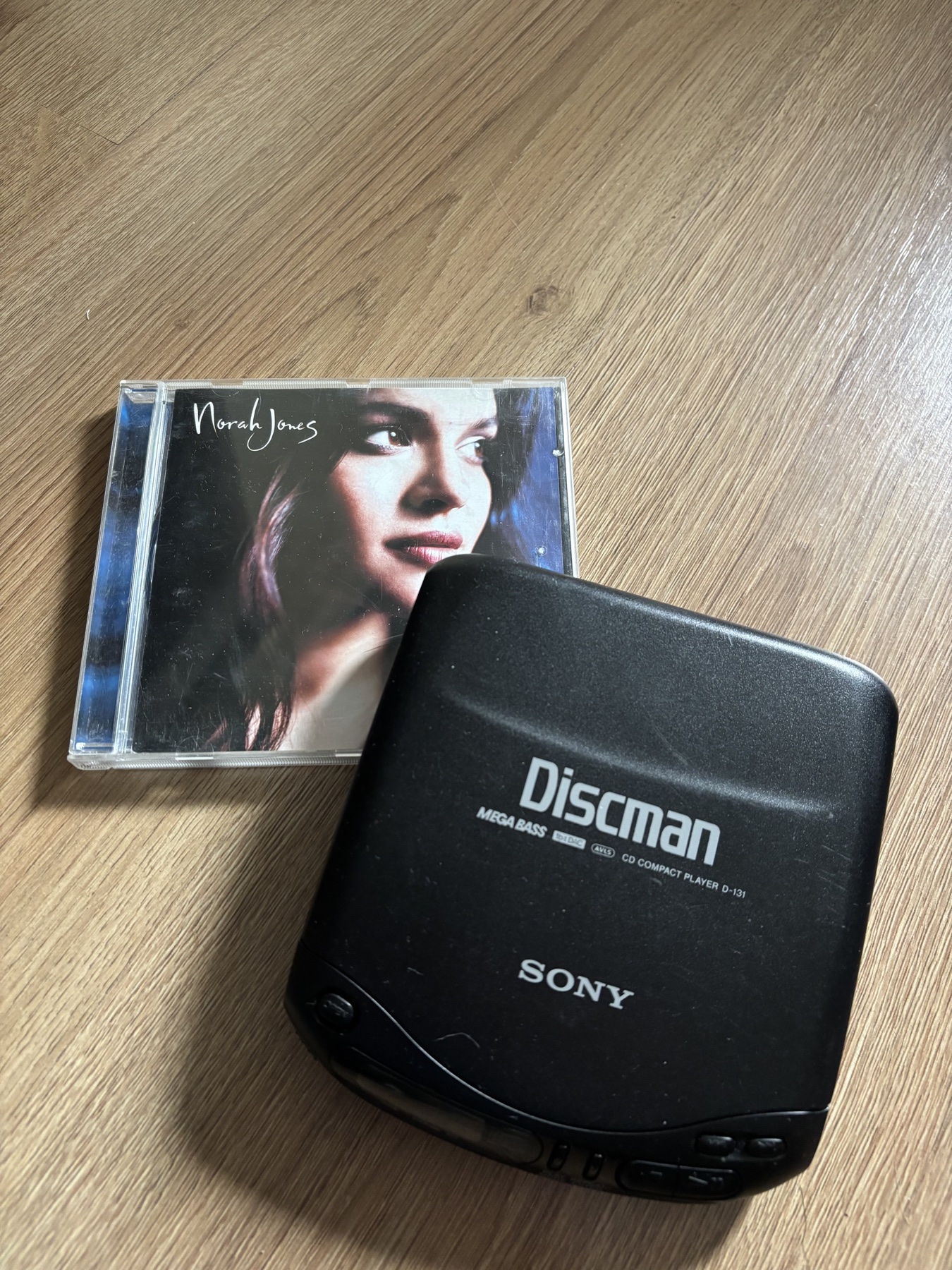
Sony Discman portable CD player from a personal collection
A Discman and a CD, ready to travel

Music on the go?

Walkman, Discman and MiniDisc players make a soundtrack portable without asking a phone or network to come along.

Explore portable audio

Five formats.
Five ways to store sound.

The physical object shapes the whole experience. Each system records, reads and protects music in its own way.

01

Groove

A stylus follows the tiny groove of an LP. Its movements pass through a cartridge and become an analogue electrical signal.

02

Open-reel tape

A tape head reads magnetic patterns on a long reel of exposed tape, threaded between two spools.

03

Compact Cassette

A cassette head reads magnetic patterns inside a small plastic shell. The shell makes tape recording much easier to carry.

04

Optical data

A CD player shines a laser at the disc and decodes the reflected digital information into stereo audio.

05

Magneto optical

MiniDisc reads the disc with a laser and uses a magnetic field when recording. ATRAC compression lets a small cartridge hold a full album.

Streaming
changed
listening.

Streaming made a huge catalogue searchable in seconds. It is brilliant for discovering artists, sharing tracks and carrying music everywhere. But it can also make listening feel permanently connected, with an app, account and network sitting between you and the music.

Offline downloads help, but they are still managed by the service. Music availability can change with licensing, release rights and region. A downloaded stream is not the same as a file or physical copy you can keep and play in any compatible machine.

That is the gap physical media fills. Your favourite album can stay on your shelf, work without a subscription and be lent to a friend. You choose the player and the moment. In return, you make room for the collection, care for the equipment and accept that a format cannot offer every recording ever released.

Streaming is access

Explore a deep catalogue, discover new music and listen across devices.

Physical is a copy

Keep an album, lend it, display it and play it without checking a catalogue.

Offline has limits

Some services allow downloads, but they remain tied to the app and its rules.

You can use both

Stream to find music, then collect the albums you want to return to.

Where to find music.

Begin with an album you love. The best copy is the one you will actually play, not necessarily the rarest or newest one. A collection can grow one affordable find at a time.

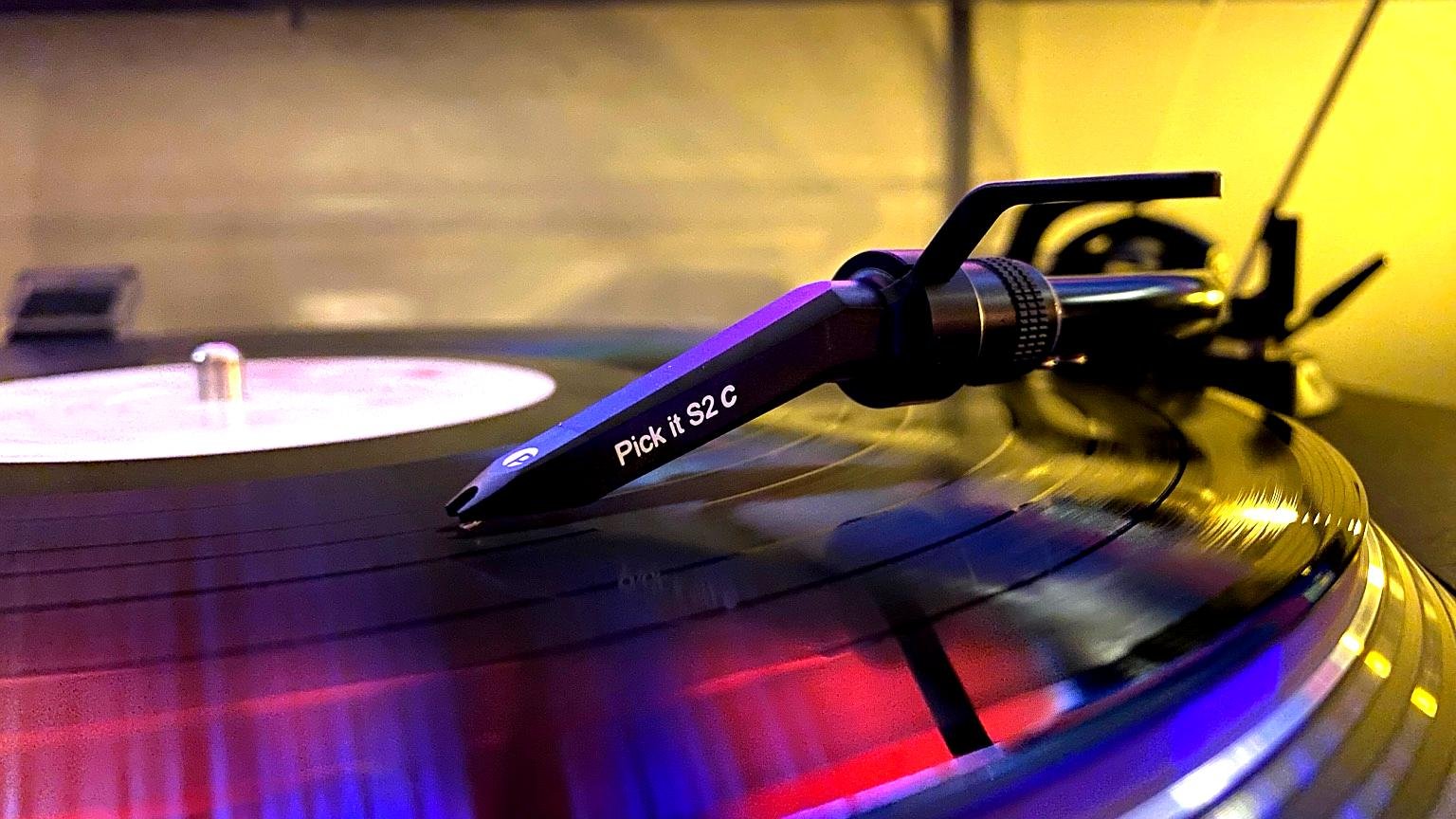
A turntable stylus resting in the groove of a vinyl record
A record playing on my own turntable

Every shelf can hide a favourite.

Local shops and secondhand bins make discovery part of collecting. Go in looking for one album, come out with a new story.

Independent shops

Local record shops are good places to browse new vinyl and CDs, ask questions and hear recommendations. Some also stock cassettes and used editions. Check artist or label shops for direct releases. Bandcamp is one place where artists and labels offer physical editions when available.

Secondhand finds

Try charity shops, thrift stores, second-hand shops, used record shops, flea markets, car boot sales and estate sales. These are good places to find affordable albums, players and unexpected releases. Prerecorded reel-to-reel tapes are rare, and a working deck can need specialist servicing, so check compatibility and condition carefully.

Online marketplaces

Discogs is useful for finding a specific pressing, album or format. eBay and local secondhand listing sites can turn up bargains, especially for tapes and MiniDisc. Compare the exact release, seller feedback, postage, taxes and return terms.

Before buying used: Check the edition and format, read the condition grade, ask for photographs of the actual item, and request a playback test for valuable media. A catalogue image is not always a photograph of the copy for sale. For MiniDisc, confirm that the player supports the disc's recording mode. A clean used CD or record can play as well as a new copy when it is the same edition and in good condition. Start with what you love, then build a collection at your own pace and budget.

Care for the object.

Physical media lasts when the object and the machine are treated well. Heat, dust, sunlight, moisture and neglect can shorten the life of both.

Vinyl

Store records upright in supportive sleeves, away from heat and direct sunlight. Hold a disc by its edge and label, keep the stylus clean, and avoid stacking heavy records flat.

Open reel

Handle reels by the flanges and hub, never squeeze the reel sides. Keep tape away from heat, dust and magnetic fields, and store reels in their boxes.

Cassette

Keep tapes in their cases and store them upright in a cool, dry place. Handle the shell rather than the exposed tape. A clean head and healthy pinch roller help protect playback.

CD

Hold a disc by its edge or centre hole and return it to its case after playing. Keep the read surface clean, and avoid scratches, sunlight and high heat.

MiniDisc

The cartridge protects the disc, but keep it clean, dry and away from heat. Let the shutter close before storage, and use a compatible player in good working order.

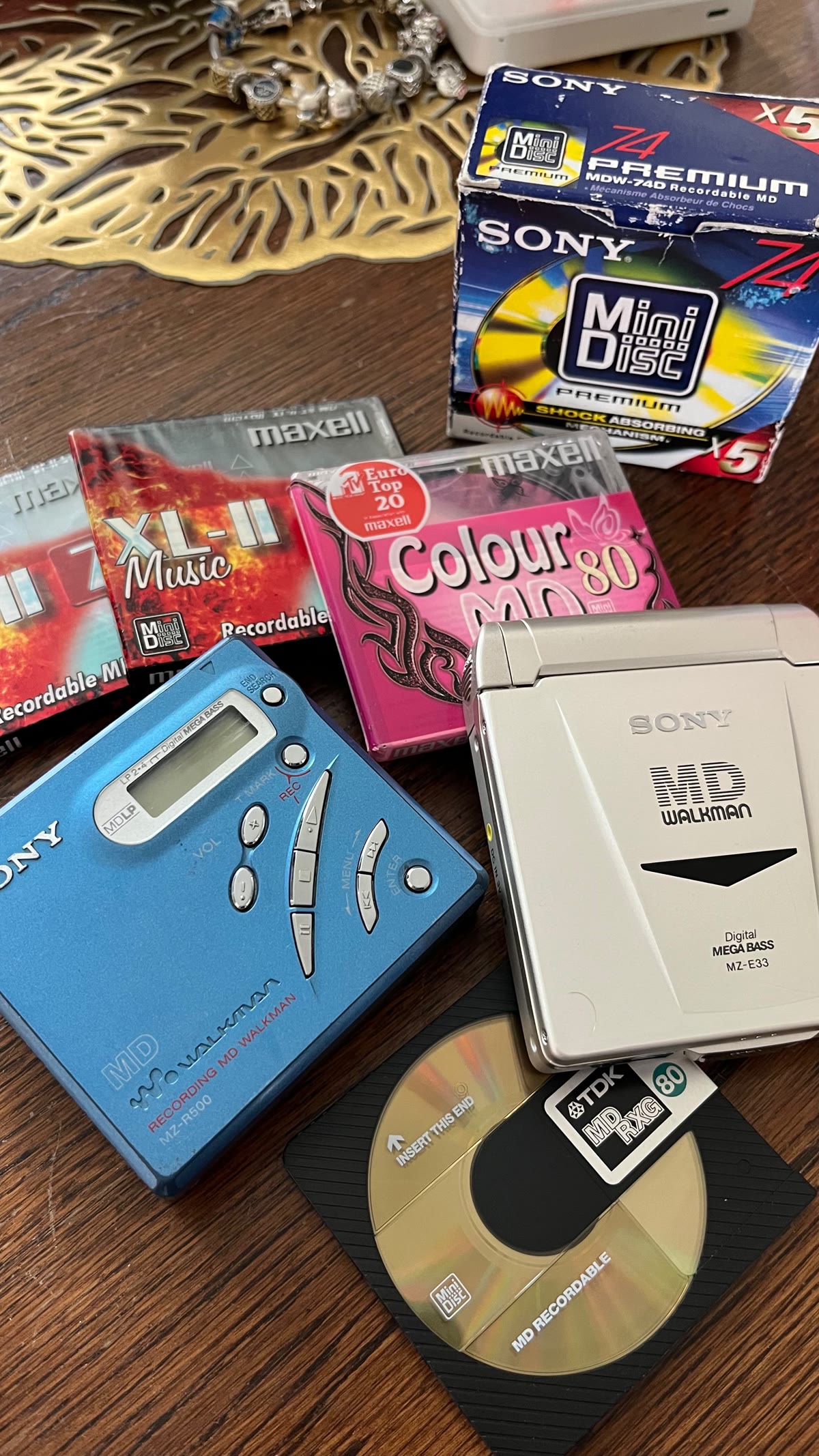
A close view of a Sony MiniDisc Walkman and colourful MiniDisc media
The little format with a lot to love

MiniDisc was ahead of its time.

It brought together two satisfying ideas: the convenience of digital track access and the freedom to record your own music. Each disc could become a neatly labelled snapshot of a mood, a trip or a moment in time.

The cartridge protects the disc, the recorder lets you shape a collection, and the player turns it into something portable. MiniDisc is a reminder that a format can be clever, practical and full of character at once.

  • Small cartridge, easy to carry
  • Record and organise your own discs
  • Fast track access and digital audio
  • Physical labels, cases and collections
See where it fits in the story

Pick your playback.

Not a winner's chart. A practical starting point for understanding what each format asks of you.

FormatSound profilePlayerPortabilityIn a car
Vinyl LPAnalogue groove, surface noise and mastering varyTurntable, phono stage, amplifierLow, best at homeCustom installation only
Reel-to-reelDetailed analogue tape, speed and alignment matterOpen-reel deck, amplifierVery low, large and delicateNot practical
Compact CassetteAnalogue tape, hiss and speed depend on the copy and deckCassette player or deckHigh, pocket portableExcellent in older cars
Compact DiscUncompressed PCM, 16 bit and 44.1 kHzCD player or compatible optical driveMedium to high, protect from scratchesEasy when a CD deck is fitted
MiniDiscDigital ATRAC compression, mode affects capacityMiniDisc player or recorderVery high, protected cartridgeDedicated MD decks are now rare

On the timeline.

From the first practical magnetic tape recorder to a digital disc small enough for a pocket.

1935AEG presents its Magnetophon tape recorder in Berlin.
1948Columbia introduces the 12 inch, 33⅓ rpm LP.
1963Philips presents the Compact Cassette in Berlin.
1982Commercial CD players and titles reach buyers in Japan.
1992Sony launches the MiniDisc system in Japan.